Thread Veins
Spider (Thread) Veins on the Legs
Thread veins, also known as spider veins or Telangiectasia, are small, dilated veins that appear on the surface of the skin. These tiny veins, which tend to be less than 1mm in size, are extremely common, affecting nearly 80% of adults at some point in their lives. They are easily recognizable due to their characteristic spider-like appearance, earning them the nickname “spider veins.”

While thread veins may not pose a significant health risk, they can be a source of distress for many people due to their visibility. They can make individuals feel self-conscious and negatively impact their confidence and self-esteem. For some, thread veins may even prevent them from fully enjoying social and holiday activities.
At Veincare Cornwall, we understand that thread veins can be a significant concern for many of our patients. Our team is dedicated to helping patients look and feel their best, and we offer a range of treatments designed to effectively eliminate thread veins. Our state-of-the-art technologies and procedures have been carefully selected to provide optimal results with minimal discomfort. We take a personalized approach, evaluating each patient’s unique situation and working with them to create a treatment plan that meets their specific needs.
If you’re tired of feeling self-conscious about your thread veins, contact our team today to schedule a consultation and start feeling confident in your own skin! With the latest and most safe treatment options available, our team of experienced professionals will help you achieve the smooth and clear skin you deserve.
Tell Me more
Spider veins, also known as thread veins, are small, thin veins that can appear red, blue, or purple on the surface of the skin. These veins are typically found on the legs, face, and hands and are a common cosmetic concern. They are caused by a variety of factors such as genetics, hormonal changes, pregnancy, injury, and certain jobs or activities that require prolonged standing or sitting.
Varicose veins, on the other hand, are larger, more prominent veins that can protrude through the skin, typically found on the legs. They are caused by malfunctioning of vein valves, which can lead to blood pooling and vein bulging.
It’s important to note that while varicose veins can contribute to the formation of spider veins, not all spider veins have an underlying varicose vein cause. Some cases are idiopathic, caused by genetics or other unknown factors.

However, thread veins around the ankle that are caused by underlying varicose veins, referred to as Corona Phlebectatica, are not just a cosmetic concern, it can be a sign of a potential risk for developing a leg ulcer in this area.
The good news is that there are a variety of treatment options for spider veins, including sclerotherapy, laser therapy, and surgery, that can help reduce their appearance or even eliminate them completely. The best treatment option will depend on the size, location, and severity of the veins. It is recommended that you schedule a consultation with a medical professional to evaluate the condition and determine the best course of treatment for you.
Diagnosing the underlying cause of spider veins is an essential step in ensuring the most effective treatment plan for patients. One of the most precise and accurate methods for identifying the underlying cause of spider veins is through venous duplex ultrasound.
This non-invasive and highly-sensitive test uses sound waves to create detailed images of the veins in the legs, allowing medical professionals to examine the anatomy of the veins as well as the flow of blood within them. The duplex aspect of the ultrasound means it utilizes two different modes – B-Mode Ultrasound, which produces a 2D image of the veins’ anatomical structures, and Doppler Ultrasound, which assesses the blood flow within the veins.
With the information gathered from this examination, medical professionals are able to determine whether the spider veins are caused by varicose veins or reticular veins, and therefore able to create a tailored treatment plan specific to the underlying cause.
This level of precision is extremely beneficial for patients, as it not only ensures that the treatment is as effective as possible, but it also greatly reduces the chance of recurrence of the veins and helps prevent further complications such as telangiectatic matting or skin staining.
Venous duplex ultrasound is non-invasive and precise, and the examination results help your surgeon to create a personalized treatment plan which greatly increases the chances of a successful outcome.
Thread veins, also known as spider veins, are a common cosmetic concern that can affect many people. They are caused by dilated blood vessels that are visible through the skin and are typically found on the legs and face.
While these veins may not present any serious health risks, they can be an unsightly inconvenience that can cause discomfort and self-consciousness. Many individuals who have thread veins may choose to avoid certain clothing or social situations because of them.
However, there is good news! With advances in technology, thread veins can now be safely and effectively treated. Sclerotherapy is the most common treatment for thread veins, a procedure in which a solution is injected into the vein causing it to collapse and eventually disappear.
It’s important to keep in mind that not all thread veins require treatment, but for those who wish to improve their appearance, sclerotherapy is a highly effective option. At your consultation, we will carefully evaluate your condition, explain the treatment options available and answer any questions you may have to help you make an informed decision.
We also want to make it clear that if the thread veins you have are causing bleeding or pain, it is considered a medical emergency and can only be treated by NHS vascular surgeons via GP or A+E referral. In the rare case where the pain is associated with thread veins, we will do a thorough examination to rule out other potential causes of pain, such as nerve pains, arterial or varicose vein issues, or musculoskeletal issues.
Thread vein treatment can be done in the clinic and it’s a safe, painless procedure that can leave you feeling more confident in the appearance of your legs. So why not book a consultation with us today and take the first step towards improved confidence and self-esteem?
Compression stockings and socks may not be effective in preventing or reducing the appearance of thread veins, however, they can provide some relief from symptoms such as swelling and tiredness in the legs. Wearing compression stockings can help to reduce swelling and improve circulation, which can lead to relief from tired and achy legs. They are also a great option for those who spend a lot of time standing or sitting, as they can help to prevent fatigue and improve energy levels.
There are many different types of compression stockings and socks available on the market today. From classic styles to fashion-forward options, there’s something for everyone. You can purchase them from your local pharmacy or online retailers such as Daylong (www.daylong.co.uk). They offer a wide range of colours and sizes to fit your needs and style.
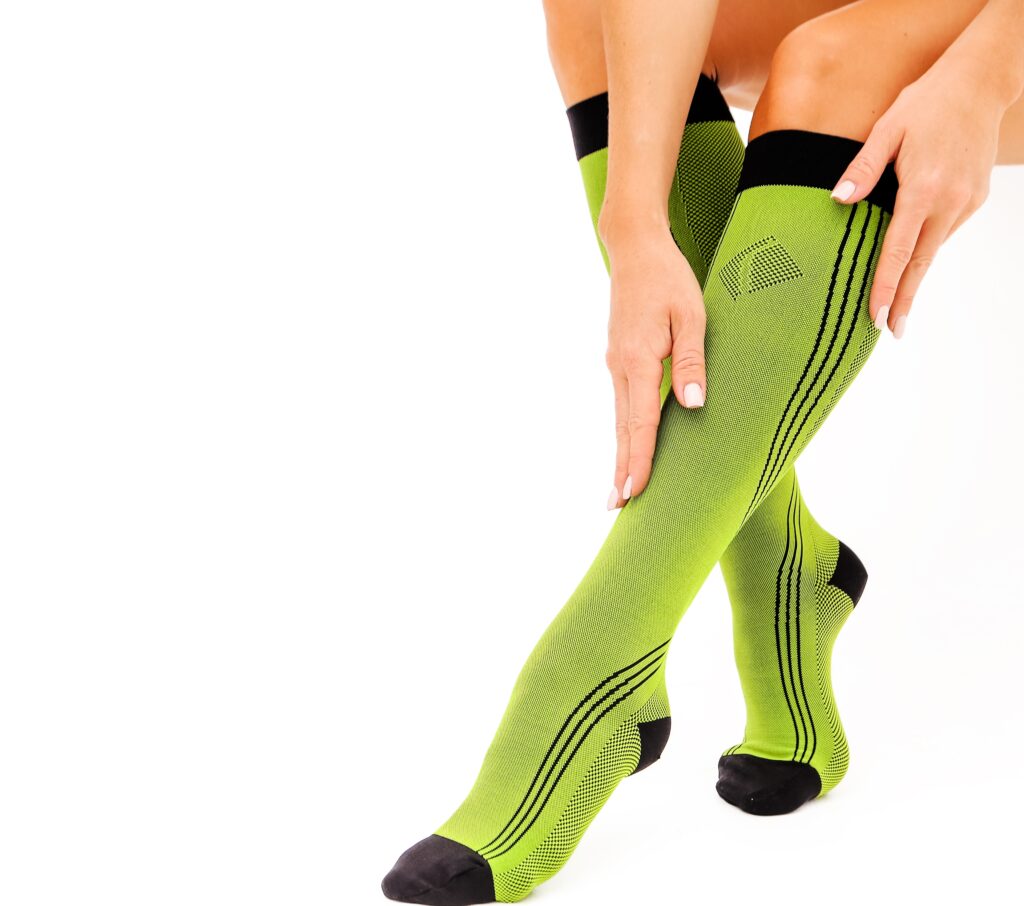
and equally effective for varicose veins.
For those whose thread veins are located below the knee, compression hosiery designed specifically for sports can be a great alternative. These products are designed to provide the same benefits as traditional compression stockings and socks but are often more comfortable and easy to move in. They can be found at most sports retailers or online stores. This type of stocking is perfect for active people or those who spend a lot of time on their feet.
Overall, while compression stockings and socks may not directly help with thread veins, they can provide many benefits that can help you to feel better and more comfortable in your everyday life. It is worth giving it a try and seeing how you feel!
Concealment
Concealing thread veins involves using various methods to minimize their appearance. Some of the most common ways to cover up thread veins include:
1. Camouflage creams: These are specially formulated creams that are designed to match the skin tone and mask the appearance of thread veins. They can be applied over the veins and blended into the surrounding skin for a natural look.
2. Fake tan products: These can be applied to the skin to darken it, which can help to make thread veins less visible. It’s important to choose a product that matches your skin tone to avoid any unevenness.
3. Concealer: There are also concealers that are specifically formulated to cover up tattoos and scars. These can be used to cover up thread veins on the legs.
4. Clothing and Accessories: Wearing clothing or accessories that cover thread veins, such as long trousers, tights, or stockings, can help to conceal their appearance.
It’s worth noting that these methods can be effective for covering up thread veins, but they may not provide a long-term solution. Furthermore, for sun-sensitive people using fake tan products can carry risks related to sun exposure. And it is important to test the products for any allergic reactions before using them on a regular basis.
Topical Creams
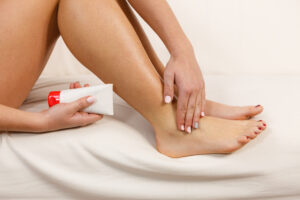
Topical creams that claim to treat thread veins, also known as spider veins, typically contain active ingredients such as Butcher’s Broom, Chestnut, Retinol, or Vitamin K. These ingredients are believed to possess anti-inflammatory and antioxidant properties that may aid in reducing the visibility of spider veins. While these creams may offer temporary improvement in the appearance of spider veins, it’s important to note that their long-term effectiveness and safety have yet to be fully studied and understood.
To achieve a more long-term solution, other treatment options such as sclerotherapy, laser therapy, and surface laser ablation may be considered. Sclerotherapy involves the injection of a solution into the blood vessel, causing it to scar and collapse, while laser therapy uses heat energy to destroy the vessel, and surface laser ablation uses laser energy to seal the vein closed. These treatments directly target the blood vessels and are considered to be more effective in the long term.
It’s always best to consult with an experienced consultant vein specialist to determine the best treatment option for thread veins. A specialist in the field, such as a vascular surgeon or a dermatologist, can help to evaluate the severity of the condition and recommend an appropriate course of treatment.
In summary, while topical creams may offer temporary improvement in the appearance of spider veins, other treatments such as sclerotherapy, short-wave diathermy, and surface laser ablation, may be considered as they directly target the blood vessels and are more effective in the long-term.
Micro-Sclerotherapy
Sclerotherapy is a highly effective medical procedure used to eliminate unsightly varicose and spider veins. This minimally invasive procedure involves the use of a sclerosant solution, which is injected directly into the affected vein. The solution causes the vein to collapse and eventually disappear, resulting in a smoother and more youthful appearance.
This procedure should be performed by an experienced vascular surgeon, or vein specialist (phlebologist), is typically undertaken in an out-patient clinic setting, and does not require anaesthesia. A small needle is used to inject the solution into the affected vein.
With success rates of up to 80-90%, sclerotherapy is highly effective in treating spider veins and can also be used to treat larger varicose veins. The procedure is relatively painless, and any discomfort is typically mild and short-lived. Compression stockings or bandages may be worn post-procedure to help reduce swelling and improve blood flow.
After the procedure, you may experience some redness, bruising, or itching at the injection site, which usually subsides in a few days. The treated veins may appear darker and more prominent before fading away, which usually takes a few weeks or months. As new veins may appear over time, maintenance treatments may be required to keep the veins from reappearing.
Sclerotherapy is a safe and effective option for treating unsightly spider veins and can be used in conjunction with other treatments such as laser therapy or surgery to achieve the best results. If you’re looking for an easy and effective way to eliminate spider veins, you can book a consultation with our experienced vascular surgeon and veins specialist Rob Windhaber, to determine if sclerotherapy is right for you.
Are there any side effects or complications from sclerotherapy?
Sclerotherapy is a highly effective procedure for treating thread veins, and it is considered safe for most patients. While minor side effects, such as swelling, redness, or bruising around the injection site, are common and typically subside within a few days, more severe complications are rare.
In rare cases, clotted blood may become trapped in the treated veins, causing dark marks that can take several months to fade. However, this can often be resolved by removing the trapped blood with a syringe and needle when it softens 4-6 weeks after the injections. Additionally, a small area of pigmentation or a brownish stain may remain in the area surrounding the treated vein, which usually fades over time.
Allergic reactions to the solution used in the injections are also very rare. And although there is a slight risk of the solution leaking out of the vein and causing skin ulceration or scarring, our healthcare professionals take every precaution to ensure that this does not happen.
Overall, sclerotherapy is a safe and effective procedure that offers patients a reliable solution for thread veins. With the guidance of an experienced surgeon like Rob Windhaber, you can expect a smooth and successful experience.
Microsclerotherapy is a highly efficient and safe method for treating small varicose veins and spider veins in the legs. The procedure is minimally invasive and involves injecting a solution directly into the affected vein, causing it to collapse and disappear over time.
With success rates ranging from 70-80%, micro sclerotherapy has been consistently shown to be effective in clinical studies and practice. Additionally, treated veins will not recur, although it is possible for new veins to appear.
The procedure is performed on an outpatient basis, and requires minimal recovery time, allowing patients to return to their normal activities almost immediately. The procedure is also well-tolerated, with minimal discomfort, stinging, or itching reported during or after the treatment. These side effects are typically short-lived.
It is worth noting that micro sclerotherapy is not appropriate for treating large varicose veins, and only visible spider or thread veins can be treated with this method.
In conclusion, micro sclerotherapy provides a highly efficient and safe solution for individuals looking to improve the appearance of their legs and alleviate symptoms caused by spider veins such as aching, heaviness, and itching. With its non-invasive nature, high success rate, and minimal recovery time, it is a highly desirable treatment option.